
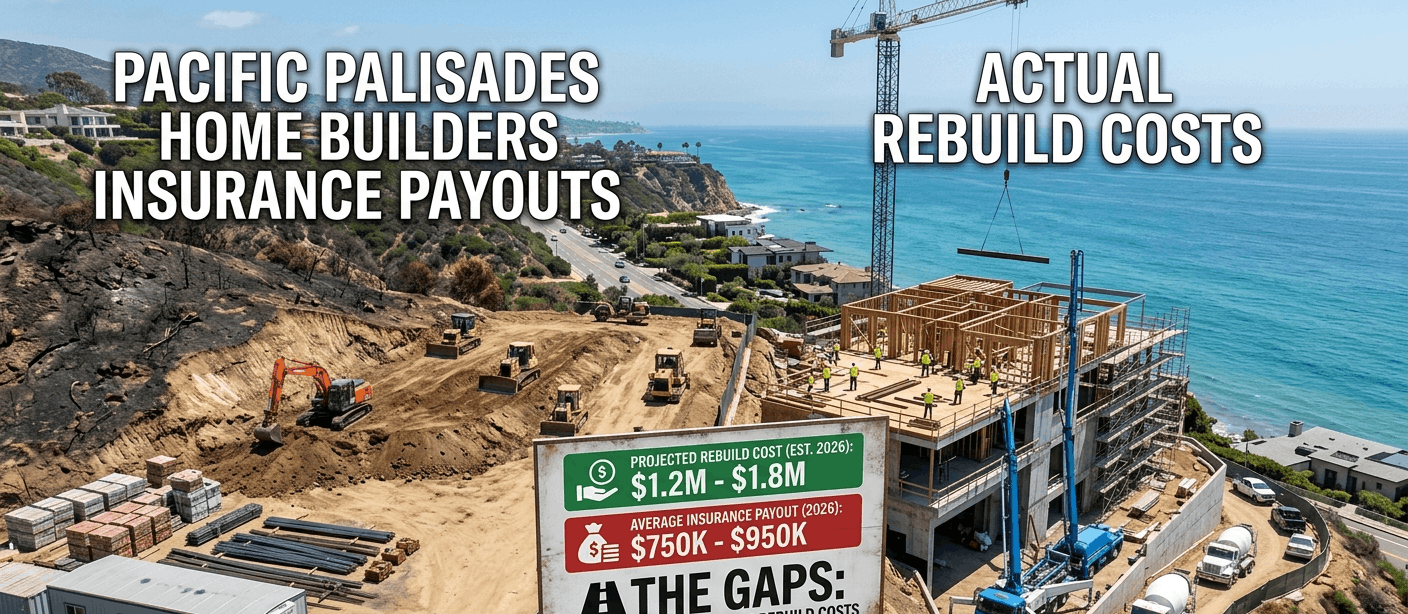
Rebuilding a property after structural damage brings unexpected financial obstacles for homeowners across Southern California. Pacific Palisades home builders report an average shortfall of $603 per square foot between carrier insurance payouts and real-world construction expenses in 2026. This substantial gap occurs because standardized carrier pricing software fails to account for specialized trade labor rates, complex hillside structural demands, and current local contractor estimates. Securing a detailed construction proposal early in the process ensures property owners understand actual market figures before agreeing to a final insurance settlement offer.
The 2026 Insurance Gap in Pacific Palisades, By the Numbers
Homeowners planning to rebuild often face large financial gaps. According to a ClaimArchitect study reported by the LA Business Journal in January 2026, 37 local property claims showed an average shortfall of $603 per square foot. This means most homeowners are left with about $1.5 million less than they need for each home.
The size of the financial gap depends on how complex the structure is and how easy it is to access the site:
- Best-Case Shortfall: $164,000 deficit on standard single-story parcels
- Worst-Case Shortfall: $3.4 million deficit on complex custom estates
- Median Shortfall: $1.4 million (559 per square foot) across standard homes
- Overall Deficit Rate: Every single claim evaluated in the report fell short of actual construction costs
Looking at these numbers early on helps homeowners set realistic budgets before starting construction.
Why Insurance Estimates Fall Short of Real Rebuild Costs
Insurance companies use automated software that bases estimates on national average labor and material costs. These tools usually set the basic replacement cost at about $462 per square foot. But local market conditions and supply issues often make these numbers inaccurate.
Local contractor bids can go as high as $1,065 per square foot when all costs are included. Insurance software often leaves out important expenses like soft costs, site risks, engineering fees, and real local labor rates. It also misses extra costs from post-fire demand, subcontractor shortages, and the special needs of hillside or coastal foundations. To fix these gaps, it’s important to use cost models that reflect the real conditions of each site.
What It Actually Costs to Rebuild in the Palisades in 2026
To understand the real cost of rebuilding after a fire in the Palisades in 2026, homeowners need to consider more than just basic framing rates. Costs for design, engineering, soil testing, and code updates all add up. Working with experienced local builders helps make sure all these details are included before construction starts.
| Category | Cost Range |
| Standard rebuild (basic finishes) | 400-500 / sq ft |
| High-end custom home | 600-700+ / sq ft |
| All-in cost (soft costs, GC, project risk) | Up to $1,065 / sq ft |
| Design, engineering, permits and site work | 15–20% of construction cost |
| Hillside-specific costs (soils, retaining and drainage) | 15,000-30,000+ |
| Fire-hardening premium (Chapter 7A) | 5–10% above base construction |
LADBS Permits, the Coastal Zone & Executive Orders That Affect Your Budget
To meet city requirements, you need to work directly with LADBS and LA City Planning instead of county offices. At Sky Builders ZHR, we include important costs like soft costs, site risks, and local labor rates that insurance software often misses. If your project keeps the original footprint or expands by up to 10%, you can get faster plan reviews and waived permit fees under Executive Orders 1 and 7. Larger projects need full zoning approval and may require more environmental reviews.
For eligible rebuilds under EO N-4-25, California Coastal Commission rules in the Coastal Zone are suspended. However, if your property is next to a bluff and not eligible, you may still face months of extra review.
| Factor | Eligible (Like-for-Like) | Non-Eligible |
| Size change allowed | Up to 10% increase | Any size, subject to zoning |
| Coastal Zone review | Suspended | May require CDP (3–6 months) |
| Permit fees | Waived (EO 7) | Waived (EO 7) |
| Estimated permit timeline | 6–8 weeks | 9–12+ months |
Bridging the Gap: Options When Insurance Shortfall Hits
Dealing with an insurance shortfall during a Palisades rebuild means you need to plan ahead and think strategically.
- Engage Professional Representation: Consult a public adjuster or insurance attorney before accepting initial settlement payouts.
- Explore Supplemental Financing: Secure SBA disaster loans or home equity options to fund residual budget gaps.
- Optimize Architectural Footprints: Adjust design scopes to fit within the 10% size expansion threshold to maximize speed and cost efficiency.
It’s essential to get a full estimate from a contractor before you settle your insurance claim. Insurance numbers and real construction costs are often very different.
Conclusion
Setting up a solid financial plan is the most important step when planning a home rebuild in 2026. If you only use automated insurance estimates, you could face big financial gaps once construction starts. These estimates often miss local labor costs, site risks, and the unique challenges of building in Southern California. By comparing real contractor bids with your insurance settlement, you can manage your budget better. Careful planning protects your money, makes permits easier, and helps keep your home’s value in the long run.