
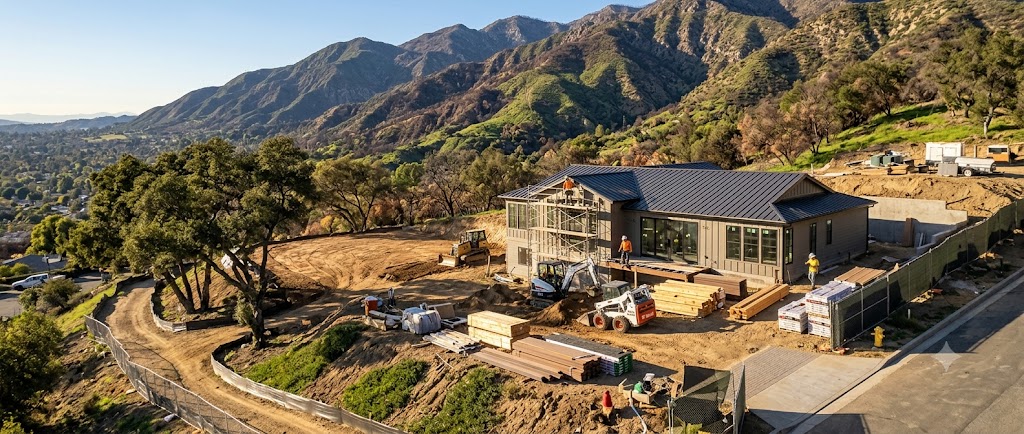
Fire reconstruction in Altadena goes through Los Angeles County since Altadena is unincorporated. Most homeowners follow a similar process: clear the site and test the soil, design the home, complete zoning review, get building plans checked, and then build to California’s wildfire code.
A like-for-like rebuild, which is similar in size and layout to the original home, usually moves faster than a larger or redesigned project. Since rules and timelines can change, we include the date when we last updated this information.
Where the Altadena Rebuild Stands Now
The Eaton Fire destroyed 9,419 structures. LA County’s dashboard showed on July 7, 2026:
- Permits Issued: 2,981.
- Under Construction: 1,796.
- Completed: 100.
Many households face delays because of financing and insurance issues.
Who Issues Rebuild Permits in Altadena?
Four county offices share the review:
| Agency | Role |
| Public Works, Building and Safety | Permits and plan check |
| Regional Planning | Zoning and historic review |
| Fire Department | Access, water and defensible space |
| Public Health | Septic and well review |
Pasadena city parcels follow Pasadena’s process.
Before You Apply: Site Clearance
Your lot must first clear these checks:
- Phase 1: The U.S. Environmental Protection Agency (EPA) removed hazardous waste.
- Phase 2: The Army Corps or an approved contractor cleared debris.
- Soil Testing: Owners can test for lead.
- Septic Review: Off-sewer lots need Environmental Health sign-off.
Confirm status with Public Works at (844) 347-3332.
Like-for-Like vs Modified Rebuilds
Your design choice determines which review process you’ll follow:
- Like-for-Like: Keeps the original use, location, and size, with growth up to 10 percent or 200 square feet, whichever is greater, and shorter zoning review.
- Modified Rebuild: If you want a larger design or a new use, you’ll need a full review under Title 22 and the Altadena Community Standards District (CSD). This adds time and extra design costs.
An architect can help you figure out which path is right for your project.
Faster Permit Pathways
Four county tools shorten either path:
- One-Stop Permit Center: The center at 464 W Woodbury Road, Suite 210, offers walk-in help, and the Electronic Permitting and Inspections portal takes online submittals.
- Pre-Approved Plans: County-approved designs, including Foothill Catalog plans, need site review and expire December 31, 2028.
- Self-Certification: An approved architect or civil engineer certifies plans in place of plan check, with county audits of 20 percent or more. Hillside sites fall outside it.
- Fee Deferral: Owner-occupants of a primary residence before January 7, 2025 qualify through recovery@planning.lacounty.gov.
Be sure to check if you qualify first.
Building Requirements
Both paths must meet these rules:
- Fire-Hardening Code: The 2025 California Wildland-Urban Interface Code (CWUIC) replaced Chapter 7A. It requires Class A roofs, ember-resistant vents, ignition-resistant walls and decking, tempered multi-pane windows, enclosed eaves, and gutter guards.
- Sprinklers and Defensible Space: State code requires interior sprinklers in new homes and accessory dwelling units (ADUs). Very High Fire Hazard Severity Zones require 100 feet of defensible space.
- Zone 0: Assembly Bill 3074 created this 5-foot ember-resistant area. The Board of Forestry withdrew its rules September 8, 2026, leaving Zone 0 pending.
Ask during plan check to find out which code edition applies to your project.
Site Rules to Check Early
At Sky Builders ZHR, we go over these lot rules with homeowners early in the process:
- CSD Limits: Modified R-1 homes need a 20-foot front yard and a 23-foot height limit near property lines.
- Hillsides: Slopes may need grading permits, soil reports, caissons, and truck access review.
- Oak Trees: Added encroachment into protected oaks requires an Oak Tree Permit.
- Utilities: Private water companies and Southern California Edison (SCE) set service rules.
- Historic Review: Landmark and district parcels get added review.
Getting answers to these questions early helps keep your plan check on track.
Step-by-Step Permit Process
The process has seven steps:
- Verify debris removal.
- Choose like-for-like or modified.
- Hire an architect and engineers.
- Apply for zoning review.
- Answer plan check corrections.
- Pass staged inspections.
- Receive a certificate of occupancy.
Each step builds on the one before it.
How Long Will Fire Reconstruction in Altadena Take?
Official figures cover two phases:
| Phase | Figure (Source, Date) |
| Debris removal | Due June 30, 2025 (LA County) |
| Permit review | 94 business days, 63 with the applicant (dashboard, February 2026) |
How long design and construction take depends on your lot.
Insurance and Funding Deadlines
Track these funding items:
- Additional Living Expenses (ALE): Coverage runs at least 24 months, up to 36 with qualifying delays.
- Code Upgrades: Check with your insurer to see how your policy covers fire-hardening upgrades.
- Small Business Administration (SBA) Loans: Terms reach 30 years, with payments deferred 12 months.
- SCE Claims: File by November 30, 2026.
- County Ordinance: Interim rules run to August 22, 2027.
The 24-month ALE coverage period ends on January 7, 2027.
Why Fire Rebuild Permits Stall
Common delay causes include:
- Plans assume sewer on septic lots.
- Landmark status surfaces late.
- Grading numbers differ from soils reports.
- Water provider rules arrive late.
- Vent or glazing details fall short of fire code.
- Corrections sit for weeks.
A pre-submittal review can help catch these issues early.
Get Help
An architect and a licensed general contractor can help you choose the right path early on. At Sky Builders ZHR, we also help clients with plan check corrections. Free resources include:
- The American Institute of Architects (AIA) Pasadena & Foothill chapter offers free consultations.
- The Contractors State License Board (CSLB) verifies licenses.
Always check every license before you sign any agreement.
Conclusion
Getting started early and preparing carefully makes fire reconstruction in Altadena go more smoothly. If you confirm site clearance, choose your design path, and hire licensed professionals before starting drawings, you’ll give county reviewers a complete file and get closer to moving back home.
County programs and insurance deadlines have set dates through 2027. We recommend checking LA County’s recovery pages before each big step, talking with a licensed professional, and keeping dated copies of all permits and insurance letters for your records.